Wednesday, February 24, 2010

The Elegance of the Hedgehog by Muriel Barbery (11)

Elegance has all of my weaknesses. Paris, France. Philosophical meditations. Precocious twelve year old in pink glasses. Protagonists who are intellectual and misunderstood. Poking fun at self-centered snobs.

It is written as two separate journals, one kept by the solitary, pre-adolescent genius, Paloma, and the other by the concierge at her upscale apartment building, the solitary, middle-aged introvert Renee. The reader sees each writer's inner most musings. To give any details of the book itself would be to betray it's beauty, which is this novel's essence. Reflections on the beauty of life, language, thought, humanity. And even translated from its native French, it is gorgeous, rich prose.

For those used to a common narrative structure, it could seem slow moving. The reader learns Paloma's and Renee's history and plans, but there is little plot development until the last third of the book. It feels like living inside the characters' minds for a few average days. But the original sedentary pace makes the second half of the book that much more precious.

It is a book to read again, and to cry over again.

Monday, February 15, 2010

Graphic Novel - Y: The Last Man (10)


Y: The Last Man - Deluxe Edition Books 1 & 2 by Brian K. Vaughan and Pia Guerra


It has been interesting reading this series after McCarthy's The Road. In Y: The Last Man, a plague kills every last male organism on the Earth, except a listless, street performing college graduate named Yorick and his pet monkey, Ampersand. It's not exactly post-apocalyptic, but it's close. This isn't just a world without men, this is a world of survivors who witnessed the gruesome and inexplicable death of their children, coworkers, lovers, neighbors. And the women not only have to rebuild their society and industries, they have to figure out how to continue the human race.

Despite the grim circumstances, Y is a fun action-flick book. The accidental hero Yorick is an occasionally moody, lovable joker. Reading it is like picking up a conglomeration of Tank Girl, Bourne, Andromeda Strain, and Playboy (there is a remarkable amount of breasts shown in an all-female society, according to Vaughn and Guerra). I like the meditations on how women interpret the plague and where they place hope for their species's salvation. The characters are real and compelling and are really the only unique aspect of the series. Power vortexes, methods of survival, the breakdown of society, a female-only culture have all been pondered in literature before. I'd love to hear an explanation of the plague and see how the women figure out the future of humanity. I suspect I won't have that satisfaction, so I'm more invested in the characters and action scenes. I will definitely pick up the next book.

Graphic Novel - Goodbye Chunky Rice by Craig Thompson (9)


I love comics. When I was a kid, I would borrow my brother's Marvel comic books. I spent the majority of my babysitting money on manga (Japanese comics) in middle and high school. Now a good friend is loaning me graphic novels from his own collection. I'm not counting these in my 52 books for the year, but I enjoy these so much that I can't help it. I need to do even a tiny review.

Goodbye, Chunky Rice by Craig Thompson

How do we say goodbye? When is the right time to leave loved ones behind in our endless search for meaning in life? Chunky Rice, the adorable turtle on the cover, leaves his best friend and journeys alone, hoping to eventually find where he belongs. Chunky asks Dandel, his also adorable mouse girlfriend, to travel with him, but she has already found her home. So she writes him notes that simply say "I Miss You" (for what else is there to say?) and sends them in bottles after his departing ship.

This short graphic novel is a tale of grief and growing up, relationships and the real world. The art is simple, all black and white, but oh-so-cute. I loved it. It is touching and sweet, but not saccharine. I liked the author's perspective on different types of grief and how they affect our families and loves. The personalities were both strange and genuine.

It kind of reminded me of the end of high school. You go off to college, leaving all that's familiar behind in a search for yourself. How important is that search anyway? And why must we leave our loves behind to embark? Often we don't realize that our relationships define and shape us, and we abandon the best ones before learning that new experiences don't always help us find ourselves.

Friday, February 12, 2010

Cloves & Insecurity

Now I only use cloves to flavor my french pressed coffee. In college I used to smoke clove cigarettes, before moving on to Parliaments, before my tiny bank account prompted a choice between caffeine addiction and the classic cool prop. One drug over another, I suppose.

A friend introduced me to Djarum, as well as other substances and experiences that year, and I liked the cigarettes immediately. The spicy aroma, the tang on my lips, the pretense of busyness. Cloves released me from my common female insecurity. Walking alone on the city streets, I could hide behind the smoke. Waiting for my boyfriend to get out of class, I could fake confidence among the strange and better dressed girls at his school. If I wanted an excuse to leave my dorm, I could go smoke on the fire escape and brood. There was never an empty moment with a pack of Specials in my purse.

I'm glad I don't need that crutch anymore. I just found out about the ban on cloves and flavored smokes last year.

And this just as various states are reconsidering the legality of marijuana.

Wednesday, February 10, 2010

A Confederacy of Dunces by John Kennedy Toole (8)

This book tested my ability to endure disgusting characters, unrelated scenes and unending, argumentative dialogue. I pressed on, hoping for a little direction in the plot, a hint of the main character's fate. It really only comes together in the last 100 pages. Dilemmas are resolved, characters and plots finally intertwine, and even though something eventually (meaning, in the last 8 pages) happens to Ignatius, it is still mysterious.

Ignatius is the most disgusting character in the novel. I was repulsed by descriptions of him. If he was heading for a seat next to you on the subway, you would move. He is a baffling, chronic liar, living in his own version of the universe and hoping for a reversal of the Renaissance. And yet, throughout the book, I pondered the meaning of sanity. Ignatius is odd, obviously, and manipulative and selfish, but is he insane? Maybe we only think people are insane when they disagree with our worldview. First the reader sees Ignatius from one perspective - he is an obese, pseudo-intellectual snob and a lazy, ungrateful son. Then the author's tone changes, and maybe Ignatius isn't so bad, with an alcoholic, abusive mother and some childhood trauma, how could he not become eccentric to cope with his squalid life?

A Confederacy of Dunces could be a thesis subject, but was still a good casual read. Toole writes intuitive, understandable and hilarious dialogue in a variety of accents. The descriptions of characters and settings would be beautiful if the subjects were pleasant. And even when I was completely confused by the events, I still laughed and enjoyed the novel.

Thursday, January 28, 2010

Survival of the Sickest by Dr. Sharon Moalem (7)

Such a fascinating and engaging book. Maolem's curiosity and excitement about connections between evolution and disease are winning. I also can't resist a Beatles reference on the very first page - "magical medical mystery tour."

Maolem's tour took me away through the relationships between chronic, inherited disease and human development. It made me remember why I wanted to be a biologist when I was a kid. Science is awesome! Exploding-things-science is cool, but I love biology and genetics. What is the purpose of hereditary disease? How has our species responded to change in the environment? Why are waterbirths actually a good idea?

The introduction explains how Maolem began his scientific journey. When he was a teenager, he tried to explore the connection between his grandfather's common, but uncommonly recognized, blood disease and Alzheimer's diagnosis. As one of the many people with a family member who suffered with Alzheimer's, I sympathized and was encouraged by Maolem's passionate search for answers.

My favorite things about science are searching for answers and making connections. Theories come and go, and people with common sense are often rejected by the scientific community for going against the grain, but it's all about trying to find and explanation and make life a little better for everyone.

Sunday, January 24, 2010

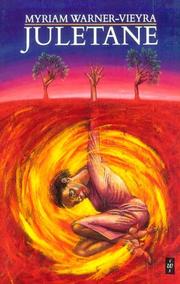
Juletane by Myriam Warner-Vieyra (6)

After four books written from the male perspective, I was happy to be inside a female mind again, even though Juletane's story is as depressing as The Color Purple. Helene, a French social worker, discovers an old notebook as she packs up her apartment in preparation for her wedding. In it is Juletane's autobiography.

After reading the novel's many bizarre and tragic events, what lingers with me are the consequences and causes of bad decisions. Juletane was disadvantaged, as an orphan sheltered by her guardian. No one warned her when she decided to marry the first man who showed interest in her. On the boat from Paris to Africa, she learns that her new husband is already married. Juletane quickly becomes depressed, deepening in her alienation, listlessness, and madness. In the next five years, she hardly attempts to go back to France, preferring to dwell in misery. She blames her misfortunes on her past, all the way to conception. Juletane lives alone with her fatalism.

Helene, through whose eyes we read Juletane's tale, is quite the opposite. A full and happy childhood, higher education, career, and independence. After her fiance dumps her, she determines that all men are brutal and hardens her heart, sleeping around and occasionally using sex for spite. Helene selfishly agrees to marry an infatuated younger man, only so she can have a child before she is too old. After reading Juletane's diary, the "block of ice around her heart" is broken. I imagine the story of the mad woman retreating from all relationships and dying at 25 in an asylum would inspire a person to change.

People can't live in isolation. Juletane was isolated by language and culture. She could have chosen to live with her circumstances or to go back to Paris. I'm pretty sure that if a Catholic unknowingly marries a polygamist, the marriage doesn't officially count, so she was not bound to her husband. Either way, she would not have been alone. Helene blocks off meaningful relationships after a great heartbreak. She imagines her solitude is strength and plans to only use her fiance for his sperm without getting close to him. But she recognizes the detriment of her self-imposed isolation. What will Helene do? The novel ends after she finished Juletane's diary. But, I suppose the only way to start is to form true, lasting, and deep relationships, starting with her marriage.